
Construction Payment Pathways
From Quote to Payment: Construction Payment Pathways
Every construction payment follows a path — from a quote, through agreed scope and completed work, to a claim, verification, approval and release. On most projects that path exists, but it is not visible end to end. This page maps it stage by stage.
From agreed scope to approved payment — one clearer pathway, visible to the people it affects.PayLocker is a construction payment integrity platform. It is not a bank and not a payment guarantee. Payment remains subject to project funding, approval and platform rules.
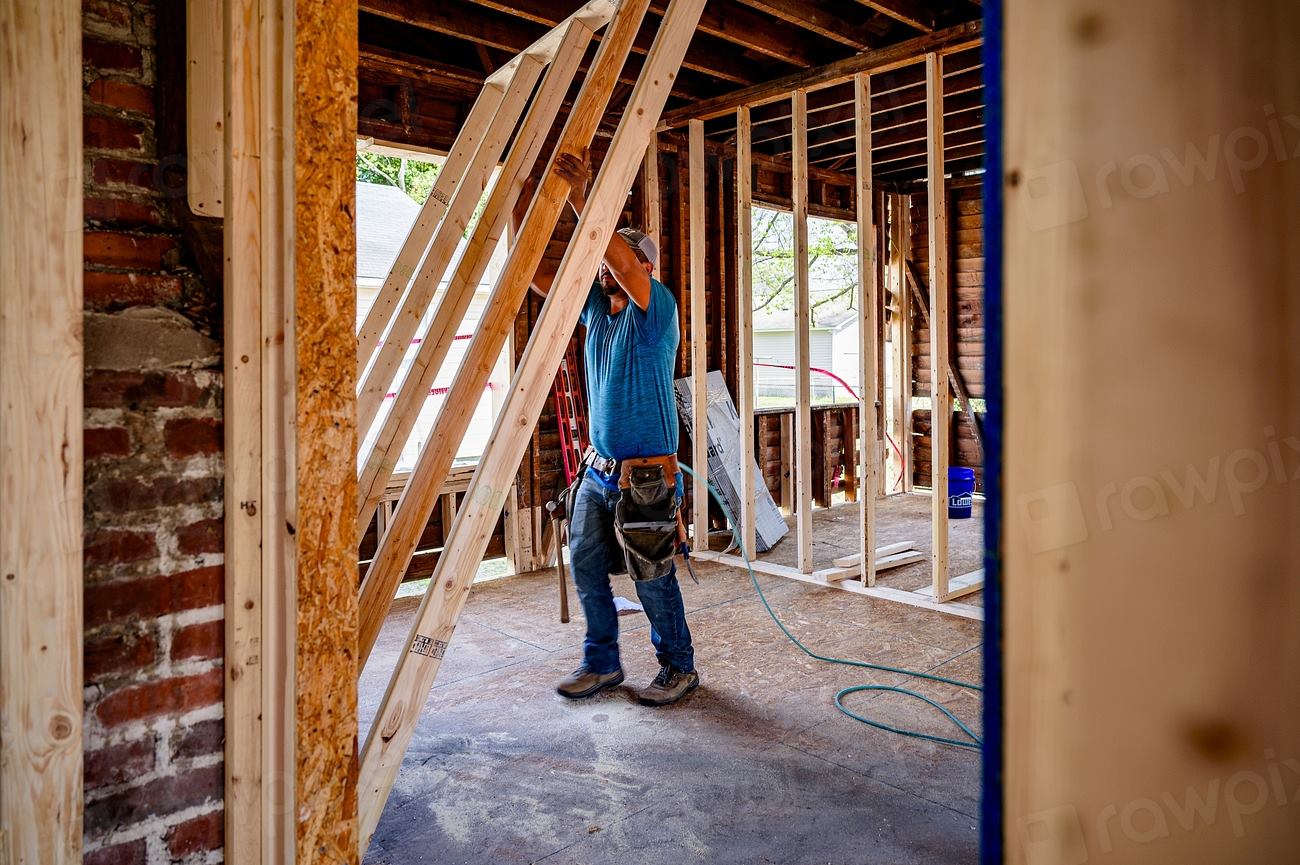
Illustrative representation of pathway stages. Not a live project, not a customer record, and not a depiction of payment timing.
What is a construction payment pathway?
A construction payment pathway is the route a payment travels from the moment work is quoted to the moment it is paid and recorded. In Australian construction it runs through eight stages: quote → agreed scope or work order → work completed → claim or invoice → evidence and verification → approval → payment → records and reconciliation. Each stage creates an obligation, a decision or a record. When every stage is visible and connected, the people relying on that payment can see where it sits and what happens next.
The pathway itself is not new — it is how construction has always worked. What varies between projects is how much of it anyone can actually see.
Why the pathway matters
A payment is the last step in a long chain of commitments
By the time an invoice is raised, a great deal has already happened. Someone has priced a scope. Someone has accepted it. Materials have been ordered, labour has been booked, and the work has been done. The payment is not the beginning of the relationship — it is the settlement of everything that came before it.
That is the practical meaning of obligation flow: an incoming construction payment is rarely free cash. Most of it is already committed downstream — to the trade who framed the stage, the supplier who delivered the timber, the plant hire that made it possible. Construction payment is obligation flow, not simply cash flow.
When the pathway between those commitments and the eventual payment is visible, planning becomes possible. A subcontractor can schedule the next job. A supplier can decide how much credit to extend. A builder can sequence the trades with confidence. When the pathway is invisible, everyone prices in uncertainty — and that cost is carried by the whole project.
A construction payment pathway connects a project to an obligation, an obligation to a verified participant, and that participant to an approved payment and a permanent record.
The complete pathway
The eight stages, from quote to record
Each stage answers a different question: what was agreed, what was done, what is claimed, what supports the claim, who approved it, what was paid, and what remains on the record. Skipping a stage does not remove it — it simply moves the question to a later, more expensive point in the project.
Stage 1 — The quote
Scope pricedA contractor, subcontractor or supplier prices a defined piece of work or supply. The quote sets out what is included, what is excluded, how it will be measured, and how it will be claimed — by stage, by milestone, on completion, or on delivery.
A quote is a commercial offer, not yet an obligation on anyone. It becomes the reference point for everything that follows, which is why an ambiguous quote produces an ambiguous claim months later.
Stage 2 — Agreed scope and work order
Obligation createdAcceptance turns the quote into an obligation of the project. A work order, purchase order or subcontract records what was agreed, at what price, on what terms, and against which project.
This is the single most important connection point on the pathway. It is where a commercial promise becomes a specific, identifiable amount owed to a specific, identifiable participant for a specific piece of work. Every later stage refers back to it.
Stage 3 — Work completed or materials supplied
Value deliveredThe work is carried out, or the materials are delivered to the site. At this moment the participant has spent money and time, and the project has received value — but nothing has yet been claimed and nothing has yet been paid.
This gap is where most of construction's payment risk actually lives. It is also where variations, provisional sums and prime cost items tend to appear, each of which changes what can reasonably be claimed at the next stage.
Stage 4 — Claim or invoice
Claim submittedThe participant submits a payment claim or invoice against the agreed scope. It identifies the project, the work performed, the amount claimed, and the period or milestone it relates to.
In Australia this stage often sits inside a statutory framework. Security of payment legislation in each state and territory sets out how payment claims are made, how payment schedules must respond, and what happens when the parties disagree. Those rules operate independently of any commercial software and are explained further on our Security of Payment in Australia overview.
Stage 5 — Evidence and verification
Under reviewThe claim is checked against what was agreed and what was delivered. Depending on the project, supporting evidence may accompany the claim — progress photographs, delivery dockets, inspection or compliance certificates, measured quantities, or sign-off from a supervisor.
Evidence requirements are set by the contract and the project, not by any platform. Some claims need very little; a structural or certifiable stage may need considerably more. The purpose is the same either way: to move the decision from assertion to something a reviewer can actually check. This is the subject of evidence-based payment verification.
Stage 6 — Approval
ApprovedSomeone with authority decides that the claim, in whole or in part, should be paid. Depending on the project this may be the builder, a superintendent, a project manager, a principal, or more than one of them in sequence.
Approval is a decision, not an administrative formality — and treating it as a distinct, recorded step matters. It establishes who accepted what, when, and against which evidence. Where more than one party has a legitimate interest in the decision, a multi-party approval workflow lets each play their defined part without duplicating the others.
Stage 7 — Payment
PaidThe approved amount is released to the entitled participant. On a structured pathway, payment follows the approval in a defined sequence and against funds available to that project, rather than competing with unrelated obligations elsewhere in a business.
Payment is never automatic. It depends on the project being funded, the claim being approved, and the rules of the arrangement being met. Where the available funds do not cover the full approved amount, a partial payment can be recorded with the outstanding balance remaining visible against the obligation rather than disappearing.
Stage 8 — Records and reconciliation
RecordedThe claim, the evidence, the approval, the payment and the receipt form a single connected record. That record is what makes reconciliation straightforward at month end, what supports an accountant or auditor, and what a party can point to if a disagreement arises later.
Most payment disputes in construction are not really disputes about money. They are disputes about what was agreed and what was accepted — questions the record answers directly. More on this in project payment records and auditability.
The structural gap
Where payment visibility breaks down
The pathway is rarely broken by bad intent. It is broken by architecture. Each stage tends to live in a different system, held by a different party, in a different format.
The quote sits in an email. The work order sits in a job management tool. The claim arrives as a PDF. The approval happens in a phone call or a site conversation. The payment leaves a general business account. The record, if it exists, is assembled afterwards from several of those places.
Nothing here is anyone's fault. Builders are managing a genuinely difficult coordination task — bridging the timing gap between what the client pays and what the trades, suppliers, wages and tax obligations require, often across several projects at once. That role is a structural feature of the model, not a failing of the people in it. We make that argument in full on why builders shouldn't have to be the project bank.
The consequence is that the connection between a payment and the obligation it was meant to satisfy is easy to lose — not because anyone hid it, but because no single place was ever designed to hold it.
Framing note: this is a visibility and payment-model issue, not a question of anyone's honesty. The great majority of construction payments are made properly by people acting in good faith inside a system that simply does not record the connection well.
What a structured pathway connects
Permissioned visibility
What contractors and subcontractors can see
The most common question on any site is not "will I be paid?" — it is "where is my claim up to?" A structured pathway answers that without a phone call.
Claim status moves through defined states, and the participant who submitted the claim can follow it. That progression replaces the two things trades most often describe as the real cost of payment uncertainty: chasing, and guessing.
Visibility is balanced, not total. Contractors and subcontractors see their own agreed quote, their own claims and their own payment status. They do not see builder margins, client stage amounts, internal project budgets or another trade's pricing. Commercial confidentiality is preserved for every party at once — that balance is what makes the model fair rather than one-sided.
See how this works for contractors and subcontractors, or read the supplier view, where the same pathway is applied to delivered materials rather than completed labour.
Status visibility describes where a claim sits in the process. It is not a statement about payment timing and does not imply that any claim will be approved.
Side by side
A conventional payment flow and a structured payment pathway
The conventional flow is not wrong, and it is how the overwhelming majority of Australian projects are delivered successfully every year. The difference is not diligence — it is how much of the process is recorded in one connected place.
| Pathway element | Conventional flow | Structured pathway |
|---|---|---|
| Visibility | Held across email, phone calls and separate systems; each party sees their own fragment. | Each participant sees the stages relevant to them, in one place, without seeing others' commercial terms. |
| Traceability | The link from payment back to the original scope is reconstructed later, if it is needed. | Payment traces to approval, approval to claim, claim to the agreed scope, as a matter of course. |
| Claim status | Usually established by asking, and often re-asked. | Recorded states — submitted, under review, approved, awaiting payment, paid. |
| Evidence | Photos and certificates exist, but in inboxes and phones rather than with the claim. | Supporting evidence can be attached to the claim it relates to, where the project requires it. |
| Approval | Often informal — a conversation, a nod, a forwarded email. | A distinct recorded decision, with the ability for more than one party to play a defined role. |
| Payment pathway | Funds enter a general account and are allocated alongside unrelated obligations. | Funds are received into a project-specific account and released against approved project obligations. |
| Records | Complete but distributed — assembled from several sources when required. | A connected chain from quote through to receipt, retained at project level. |
| Reconciliation | A manual exercise at month end, and a harder one at project close. | Supported by claim, approval and payment histories that already align to the project. |
| Stakeholder confidence | Built on relationships and reputation, which do most of the work in practice. | Relationships plus a shared record, so confidence does not depend on memory. |
A hypothetical walkthrough
One claim, followed from quote to receipt
The following is a simplified, hypothetical illustration created for this page. It is not a customer, not a case study, and not a description of any actual project. Figures are round numbers chosen for clarity.
An electrical subcontractor is engaged on a single residential build. The scope covers rough-in and fit-off, priced in two claim points. What follows is how that engagement moves along the pathway.
The subcontractor quotes $24,000 for the electrical scope, split into rough-in and fit-off, with the claim points named in the quote itself.
The builder accepts. A work order is raised against the project for the agreed amount and terms. The subcontractor's details and nominated account are verified.
Rough-in is completed at frame stage. A variation for two additional circuits is recorded at the time it is instructed, not later.
A claim is submitted for the rough-in portion plus the recorded variation, referencing the work order it belongs to.
Progress photographs and the instruction for the variation are attached, because this project's rules call for them at this stage.
The claim is checked against the agreed scope and approved. The approval is recorded — who approved it, when, and against what evidence.
The approved amount is released to the subcontractor's verified account in the approved sequence, subject to project funding and the rules of the arrangement.
Quote, work order, variation, claim, evidence, approval, payment and receipt sit together — available at fit-off, at project close, and at year end.
The value of the walkthrough is not any single stage. It is that at fit-off, three months later, nobody has to reconstruct what happened at rough-in. The record is already there, and every party looking at it is looking at the same thing.
Across the project
Who a structured payment pathway serves
A pathway only works if it is useful to every party standing on it. Each has a different relationship to the same eight stages.
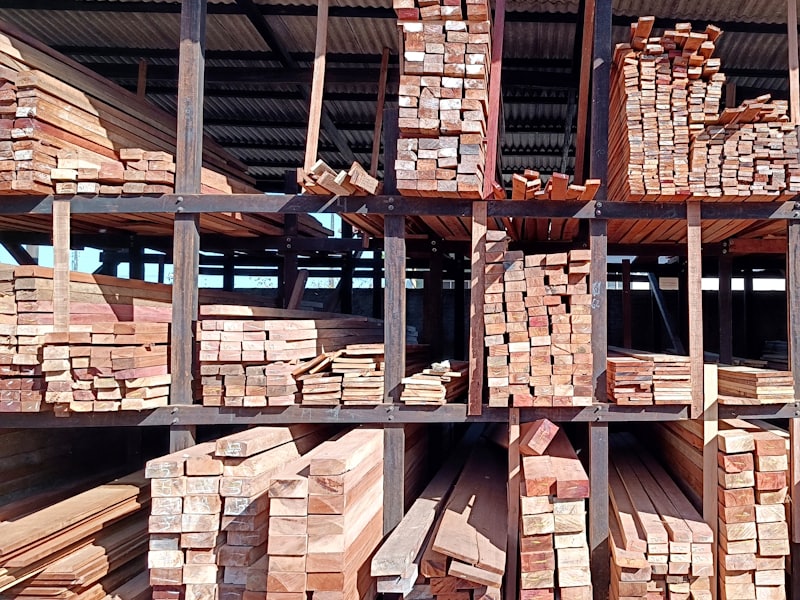
A clearer route from quote to payment
Visibility of where each claim sits, a record of what was approved, and less time spent chasing an answer that should be readable.
Fewer unknowns between stages
Claim status you can follow, evidence attached to the claim it supports, and a stronger record if a question is raised later.
Materials connected to a project
Supply tied to project-specific obligations rather than a general trading account, with clearer reconciliation for accounts teams.
Control of the build, less of the bank
You keep full control of delivery and sequencing. What changes is the administrative burden of being the project's informal paymaster — and the ability to demonstrate payment discipline as a competitive strength.
Money that stays connected to the build
Confidence that funds paid to the project remain aligned with approved progress, with visibility of stage and approval status — not builder margins.
Consistent governance across projects
The same approval structure and record standard applied project to project, supporting portfolio-level oversight and reporting.
Drawdowns aligned to obligations
Better visibility of how released funds relate to approved progress and approved obligations, which supports lending oversight.
Where PayLocker fits
What PayLocker adds to the pathway
PayLocker does not replace the pathway — it makes the existing one visible and connected. It is a governance layer over the way construction already works, not a new way of building.
Stated plainly: PayLocker is not a bank, an insurer, accounting software, a project management tool or a regulator, and it does not guarantee payment or any project outcome. It does not replace good builders, existing contracts, statutory schemes or professional advice — it strengthens the payment layer beneath them. Payment remains subject to project funding, approval and the rules of the arrangement.
Common questions
Construction payment pathways: frequently asked questions
It is the route a payment travels from quote to record: quote, agreed scope or work order, work completed, claim or invoice, evidence and verification, approval, payment, and records and reconciliation. Every project follows this path in some form. What differs is how much of it is visible to the parties who depend on it.
A claim is made against work already performed or materials already supplied under an agreed scope. It identifies the project, the work, the amount and the period or milestone it relates to. The claim is then checked against what was agreed and delivered before an approval decision is made. In Australia, payment claims are also governed by security of payment legislation in each state and territory, which sets out how claims are made and responded to.
The claim is reviewed against the agreed scope and any evidence supplied with it. The party authorised to approve payment then makes a decision — approval, partial approval, or a request for more information. Where a claim is approved, it moves into the payment sequence. Where it is approved in part, the balance remains visible against the obligation rather than being lost.
On a structured pathway, yes — a contractor can follow their own claim through recorded states such as submitted, under review, approved, awaiting payment and paid. Status describes where the claim sits in the process. It is not a commitment about timing and does not indicate that a claim will be approved.
It depends entirely on the project and the contract. Common examples include progress photographs, delivery dockets, measured quantities, supervisor sign-off, and inspection or compliance certificates where a stage requires certification. Evidence requirements are set by the project's own rules, not by any platform. The purpose is to give the reviewer something checkable rather than asking them to take the claim on trust.
No. PayLocker does not guarantee payment, does not guarantee any project outcome and is not an insurer or a bank. It is designed to make the payment pathway structured, visible and recorded. Payment remains subject to project funding, approval and the rules of the arrangement.
That is determined by the project and its contracts. Depending on the arrangement it may be the builder, a superintendent, a project manager, a principal, or several parties acting in a defined sequence. A multi-party approval workflow reflects that structure rather than changing it — each party acts within the authority they already hold.
Yes. The stages are the same, with delivery in place of completed labour. A supplier quotes, a purchase order is raised against the project, materials are delivered, an invoice is submitted, delivery evidence supports it, the invoice is approved and payment follows. The commercial benefit is that supply is connected to a specific project obligation rather than a general trading relationship.
Visibility is permissioned. Each participant sees the information relevant to their own position — their agreed scope, their claims, their approvals, their payment status. Builder margins, client stage amounts, internal budgets and other parties' pricing are not shared. Transparency of process does not require disclosure of everyone's commercial terms, and the pathway is designed so it never does.
The claim, any evidence, the approval decision, the payment and the receipt are retained together at project level. Because the record is already organised by project and by obligation, month-end reconciliation and project close become a matter of reading what exists rather than reassembling it from email, phone records and separate systems. The same record supports accountants, and gives each party something specific to point to if a question is raised later.
No, and it does not attempt to. Security of payment legislation, statutory trust arrangements and contractual rights operate independently of any platform. A structured pathway sits alongside them — producing clearer records of what was claimed, what was supported and what was approved. It is not legal advice and does not make legal determinations.
No. The builder keeps full control of programme, sequencing, trade selection and delivery. What changes is the treatment of the money and the quality of the record around it. For many builders the practical effect is less payment administration and a clearer way to demonstrate payment discipline to clients, financiers and the trades they want to keep.
Next step
See how the pathway applies to you
The eight stages are the same on every project. What they mean depends on where you stand on them — quoting the work, supplying the materials, running the build, funding it, or living in it.