

Payment Integrity · Construction Payment Governance
Obligation Flow: Why Construction Payment Is More Than Cash Flow
In construction, money received for a project is rarely just cash available to the business. Much of it is already connected to work, materials, trades, suppliers and other obligations required to deliver the project.
Cash flow
Obligation flow
Construction payment is not simply cash flow. It is obligation flow.
That single idea sits behind most of the payment difficulty in Australian construction — and behind most of the confusion about it. The distinction is straightforward once it is named.
Cash flow
Describes the movement of money. A business-level view.
Obligation flow
Describes the commitments that move with that money. A project-level view.
Both are real, but only one of them tells you whether a project is actually funded to reach completion.
The starting point
Cash Flow Is Only Part of the Construction Payment Story
Cash-flow thinking is sound business practice. Money in, money out, timing differences managed, working capital preserved.
In most industries it works well because revenue is genuinely the business's own money once earned. A retailer that banks a week of takings holds unrestricted funds. What it does next is a management decision, not a governance question.
Construction does not behave this way, for structural reasons rather than cultural ones.
A residential progress payment is not a reward for a completed transaction. It is a tranche of project funding released against a stage of a build that is not yet finished. At the moment it lands, a large proportion of it is already spoken for — frame trades not yet invoiced, materials ordered but not delivered, approved variations awaiting payment, retention that will need to be released later, and the remaining scope required to reach handover.
The distinctionConventional cash-flow management is not wrong. It is simply incomplete for construction. It answers how much money is moving. It does not answer what that money is carrying with it.
That second question requires another layer of visibility — the relationship between project money and project obligations. That relationship is what we call obligation flow.
Framework one
What Is Obligation Flow?
Definition
Obligation flow is the movement of project money together with the approved obligations that money is intended to support.
The definition is deliberately narrow. It is not a synonym for cash flow, and it is not a moral claim about anyone's conduct. It is a description of what construction money actually is: committed money in transit through a chain of project obligations.
The difference becomes obvious when the two models are drawn out.
Cash flow
A business-level view of movement.
Obligation flow
A project-level view of commitment.
Cash flow vs obligation flow
| Dimension | Cash flow | Obligation flow |
|---|---|---|
| Unit of analysis | The business | The project |
| Core question | How much money is moving? | What is this money committed to, and to whom? |
| Treats payment as | Revenue received | Funding released against obligations |
| Time horizon | The reporting period | The life of the project |
| Measures health by | Liquidity and solvency | Funds available against obligations remaining |
| Blind to | Which project's obligations the money belongs to | Nothing about the business as a whole — it is not a substitute view |
| Answers | Can the business pay its bills this month? | Is this project funded to completion, and is everyone entitled to be paid identifiable? |
Scroll the table horizontally on smaller screens.
Neither column replaces the other. A builder still needs a cash-flow model. The argument of this article is that a project also needs an obligation-flow model, and that the industry has historically had only one of the two.
The mechanics
Why Construction Payments Carry Obligations
Money entering a construction project is unusual because the majority of it is pre-committed before it arrives.
A single stage payment typically stands behind:
- subcontractor commitments already appointed and priced
- trade labour performed or scheduled
- supplier accounts, often on terms that fall due before the next inflow
- material procurement, deposits and delivery
- plant, access and site costs
- supervision and project administration
- approved progress claims awaiting payment
- approved variations, provisional sums and prime cost adjustments
- the remaining obligations required to reach practical completion
Each of these is a commitment to a real, identifiable party with a real entitlement. The money has a project purpose from the moment it is released — including at the point where it enters the builder's broader financial environment.
The cruxThe obligation does not disappear because the money has entered a general business account. It simply becomes harder to see.
The structural gap
The Disconnect Between Payment and Purpose
The traditional model works, roughly, like this:
- The owner or financier releases a stage payment.
- The payment enters the builder's business.
- Inside that environment, project money can become difficult to distinguish from other business cash — other projects, overheads, tax, wages, deposits on future work.
- Downstream obligations connected to that specific payment may remain unpaid, and there is no shared record showing which ones.
- Physical progress on site can therefore appear healthy while financial exposure quietly accumulates behind it.
Note what is not being said here. This is not an accusation of misuse. The traditional structure can allow this drift even where every party is diligent, well-intentioned and solvent. Commingling is the industry's default architecture, not a decision most builders consciously make. Multi-project businesses, staged inflows and trade terms that do not align produce it naturally.
The structure does not necessarily provide visibility into the link between a payment and the obligations that payment was meant to satisfy. Once that link is lost, it can be very difficult to reconstruct — which is why post-failure investigations so often depend on rebuilt spreadsheets rather than contemporaneous records.
In shortThe problem is structural. It should be addressed structurally.
Timing is not governance
Why Staged Payments Do Not Automatically Create Payment Governance
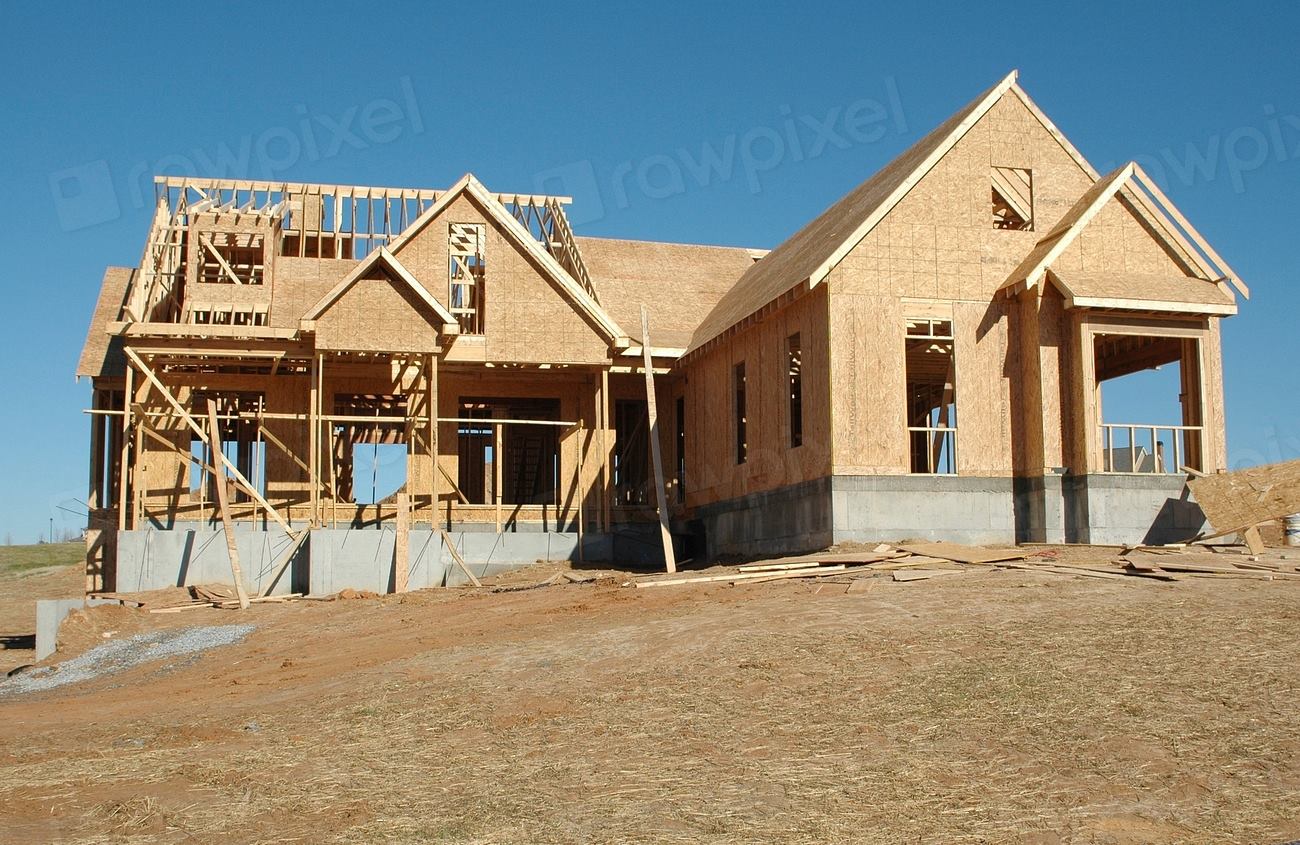
Australian residential construction already has a staged payment framework — deposit, base, frame, lock-up, fixing, completion. It is a genuine control, and it does real work: it prevents wholesale prepayment and ties funding to observable milestones. See our overview of how progress payments actually work for the mechanics.
But staging governs one variable only: when money enters the project.
It does not, by itself, govern how that money stays connected to obligations afterwards.
A stage payment does not answer:
- who remains unpaid on this project right now
- what obligations are still outstanding, and at what value
- what funds remain available against those obligations
- whether approved claims have actually been satisfied
- whether enough remains for the obligations still ahead
Stage completion tells you the frame is up. It tells you nothing about whether the framing contractor has been paid, or whether the money for the next stage is still available to pay them. Those are different questions, and the second one is the one that matters financially.
This is the gap that construction payment governance is concerned with: the layer between the payment and the purpose.
System pressure
The Builder Is Often Forced to Become the Project Bank
There is a timing problem sitting underneath all of this, and it lands almost entirely on the builder.
Owner payments and financier drawdowns arrive on stage completion. But trade invoices, supplier terms, material deposits, wages, plant hire and tax obligations do not wait for stage completion. They fall due on their own schedule.
The gap lands here
Good builders can be forced into acting as the project bank.
This is a system pressure, not a builder failure. Someone must bridge the gap between staged inflows and obligations that fall due on a different schedule — and in the traditional model, it is the builder, using working capital, funds from other projects, or their own balance sheet as a buffer.
Timing pressures converging on the builder
It is worth being precise about what that role actually involves, because it is rarely acknowledged as a role at all. The builder is simultaneously asked to be the constructor, the financier of timing gaps, the paymaster for the entire supply chain, the debt collector when claims are slow, and the risk buffer when something goes wrong. Only the first of those is what they contracted to do, priced for, or are licensed to be good at.
The argument is developed further in the case against the builder-as-financier model, and it matters for a reason that is easy to miss: a builder carrying the project's financing burden is a builder whose financial position is entangled with, rather than visible within, the project. Removing that burden is not a constraint on builders. It is a release.
Framework two
The Hidden Chain Behind Every Construction Payment
Every construction payment sits inside a chain. Reading it properly changes how a payment looks.
This is the obligation flow chain. A payment is not an endpoint. It is a link. Each stage of the chain depends on the one above it having been completed and funded. Work is performed on the expectation of the payment; the payment is released on the evidence of the work; completion depends on every link holding.
Two consequences follow.
First, a break anywhere propagates downward. If money stops moving between the project payment and the approved activity, the trades below it feel it — not immediately, but with a lag that hides the cause. By the time a supplier withholds delivery, the break happened weeks earlier and several links up.
Second, the chain is only as visible as its weakest record. Most participants can see one link. The subcontractor sees their own claim. The supplier sees their own invoice. The homeowner sees the stage. The financier sees the drawdown. Almost nobody sees the chain end to end — which is precisely why problems are usually identified late. This is the ground covered by visibility across the construction supply chain.
Consequences
What Happens When Obligation Flow Becomes Invisible?
When the connection between money and obligation is not visible, a set of predictable pressures can build. Not on every project, and not always seriously — but the pattern is consistent enough to be worth naming.
- Payment uncertainty spreads through the supply chain, because participants cannot see where they sit.
- Suppliers extend exposure without knowing what else the project owes.
- Contractors chase, follow up and re-submit — administrative cost that produces nothing.
- Payments run late, and late payment compounds down the chain.
- Financial pressure concentrates on the party least able to see it coming.
- Remaining obligations become difficult to quantify, which makes forecasting completion cost difficult too.
- Physical progress becomes disconnected from financial health.
- Problems are identified later than they should be — often when work stops rather than when the numbers first moved.
None of this requires anyone to behave badly. It requires only that the information not exist in a shared, current, structured form.
Key takeawayLate identification is not primarily a diligence failure. It is an information-architecture failure. The data was never assembled in one place while it still mattered.
Framework three
Obligation Flow Changes How We Think About Project Health
Construction has excellent instruments for measuring physical progress and comparatively poor ones for measuring project financial position. So we tend to use the first as a proxy for the second.
Percentage complete, stage achieved, progress claim issued, contract value — all real, all useful, all silent on the question of whether the project is funded for what remains.
Physical progress measures
- Stage completed
- Progress claim issued
- Percentage complete
- Work visibly advanced
Financial position measures
- Available project funds
- Approved invoices, paid and unpaid
- Committed contracts and appointed values
- Obligations still outstanding
- Variations, provisional sums and prime cost adjustments
- Projected cost to completion
- Remaining payment commitments against remaining funds
Physical progress vs financial position
Put those two dimensions on separate axes and the useful insight appears.
Financially sound
Financially exposed
Physically advanced
Healthy
Progress and funding are aligned; the remaining scope is funded.
Looks like the best case
Site inspections reassure everyone. Obligations behind the progress are unpaid, or the remaining scope is underfunded.
Physically behind
Recoverable
Visible, uncomfortable, and usually managed — delay is obvious to everyone.
Compounding
Both dimensions are visibly wrong; typically identified, though often late.
A project can be physically advanced while remaining financially exposed.
That top-right quadrant is where most late-stage construction payment failures live. It is the only quadrant that a site visit cannot detect, because everything visible is going well. It is also the quadrant that a pure cash-flow view of the business cannot isolate, because at business level the project's exposure is blended with everything else.
Obligation flow is the lens that makes that quadrant visible while there is still time to act.
The objective
What Payment Integrity Looks Like in an Obligation-Flow Model
If the problem is a broken connection, the objective is to maintain the connection. That is what construction payment integrity means in practice: project money remaining connected, throughout the life of the project, to the project it was paid for, the approved work and materials it funds, the verified participants entitled to receive it, and the obligations required to reach completion.
Concretely, a payment-integrity model maintains a continuous, visible relationship between:
- project funds and the specific project
- participants and verified identity and entitlement
- work performed and approved
- claims, invoices and variations and their approval status
- payments made, partial payments recorded, balances outstanding
- obligations remaining and funds remaining
The pointThe objective is not simply to move money. Moving money is easy and has been solved for decades. The objective is to preserve the relationship between money and purpose while the money moves.
The practical application
How PayLocker Keeps Obligation Flow Connected
PayLocker is Australia's Construction Payment Integrity Platform. It adds a governance layer between construction payment and the obligations that payment is intended to satisfy. It is not a bank, an insurer, accounting software or a project management tool, and it does not replace the builder, the construction contract or statutory schemes — it strengthens the payment layer beneath them.
01
Project funds
02
Project-specific account
03
Verified participants
04
Approved claims
05
Approved obligations
06
Controlled payment pathways
07
Visible payment record
08
Project completion
The model works on a small number of principles.
A project-specific payment environment
Project funds are received, held and released through an account specific to that project, kept separate from general business cash flow. The account is not simply a place where money sits; it is part of a controlled payment workflow connecting the funding party, the contract, approved activities, participating builders, contractors and suppliers, quotations, invoices, variations, approvals and final payment recipients.
Verified participants
Participants are identified through appropriate KYC and KYB processes, with records that may include legal and trading name, ABN or ACN, GST registration status, licence details, nominated bank account, project role and appointment information. This reduces ambiguity about who is entitled to be paid.
Approved obligations drive payments
PayLocker separates project inflows from project outflows. Stages determine when money enters the project. Approved obligations determine how money is paid out. Where funds are available and a project obligation has been properly approved, the entitled participant may be paid in the approved sequence. Approval mechanics are covered on the multi-party approval and evidence-based verification pages.
Sequential and partial payments
Where approved obligations exceed the available balance, payments are processed in the approved order. The available balance may be applied to the next invoice, a partial payment can be recorded, the unpaid balance remains visible, and the next project inflow is applied to that outstanding balance before later obligations. The result is a transparent payment queue rather than an opaque one — participants can see whether they have been approved, where they sit in the order, what has been paid and what remains.
A durable record
Quotation value, invoice value, GST treatment, approval date, payment date, part payment, outstanding balance and variation value are recorded as they happen, not reconstructed afterwards. See construction payment auditability for what that record supports.
Project-health reporting
Available funds, approved invoices, committed contracts, uncommitted activities, remaining budget, variations and projected completion cost can be compared — which is what makes the physically-advanced-but-financially-exposed quadrant visible earlier than it would otherwise be.
To be clear about what this is not: PayLocker does not guarantee that any participant will be paid, does not protect against every commercial risk, and does not prevent a project from encountering difficulty. It governs the connection between money and obligation, and makes that connection visible to the parties entitled to see it. The how it works page sets out the mechanics in sequence.
By audience
What Obligation Flow Means for Different Stakeholders
Homeowners
- Traditional challenge
- Money is paid at stages with limited visibility of where it goes next.
- Obligation-flow perspective
- Their payment is the top of a chain, not the end of a transaction.
- Potential benefit
- Confidence that project money stays connected to the project; visibility of stage, approval and payment status.
Builders
- Traditional challenge
- Forced to bridge timing gaps and act as the project bank.
- Obligation-flow perspective
- Obligations are visible and governed rather than carried personally.
- Potential benefit
- Relief from the financier and paymaster burden; margin visibility; demonstrable payment discipline as a competitive advantage.
Contractors & subcontractors
- Traditional challenge
- Uncertainty about approval status and payment order.
- Obligation-flow perspective
- Their claim is an approved obligation with a defined position in a sequence.
- Potential benefit
- A clearer pathway from quote to payment; claim and approval visibility; less chasing.
Suppliers
- Traditional challenge
- Exposure to a builder's general cash-flow position.
- Obligation-flow perspective
- Supply is tied to the project, the order and the delivery evidence.
- Potential benefit
- Project-linked supply with structured payment pathways and greater payment confidence.
Developers & principals
- Traditional challenge
- Limited consolidated view across projects.
- Obligation-flow perspective
- Each project's obligations are attributable to that project.
- Potential benefit
- Structured release, audit trail and clearer portfolio-level exposure.
Financiers
- Traditional challenge
- Drawdowns released against progress, with limited view of obligations behind it.
- Obligation-flow perspective
- Funding is assessed against obligations remaining, not only progress achieved.
- Potential benefit
- Permissioned visibility of funds, obligations, recipients and balances; stronger drawdown evidence; earlier stress signals.
Government, regulators & industry bodies
- Traditional challenge
- Payment problems surface late, after harm has occurred.
- Obligation-flow perspective
- Payment integrity is infrastructure that sits beneath existing schemes.
- Potential benefit
- Structured, permissioned information that complements — never replaces — security of payment legislation and statutory trust frameworks.
Framework four
Obligation Flow Is a Better Mental Model for Construction Payment
The industry has traditionally treated construction payments as financial transactions: an amount, a date, a payer, a payee. Everything else — the work, the approvals, the entitlement, the remaining scope — has been treated as context sitting outside the payment.
The stronger framing inverts that.
Money does not move alone. It moves with purpose, commitments and project obligations.
Under that framing, a payment is a node connecting five things that the traditional model keeps in separate systems:
The payment node
This is why payment integrity is better understood as infrastructure than as software. Software processes claims and moves funds. Infrastructure maintains a relationship — in this case, the relationship between project money and project purpose — as a permanent property of how the project operates, available to every party with a legitimate interest in it.
The distinction is not semantic. Software is something a builder buys. Infrastructure is something an industry runs on.
The shift
From Cash Flow to Payment Integrity
The shift is best understood as a change in the question being asked.
Cash flow asks
How much money is moving?
Payment governance asks
Where is the project money, what obligations is it connected to, who is entitled to receive it, what has been approved, what has been paid, and what remains?
The second question does not make the first irrelevant. Cash-flow management remains essential business practice, and no builder should stop doing it. Payment governance adds a dimension the first question was never designed to answer — the project dimension.
The operating rule
The Practical Principle
If the concept reduces to one operating rule, it is this. Project money should remain:
Visible
Participants with a legitimate interest can see the position while it still matters.
Attributable
Every dollar is identifiable to a project, an obligation and a recipient.
Connected
The link between payment and purpose survives the payment.
Controlled
Release follows approval, not availability alone.
Traceable
The record is created as events occur, not reconstructed afterwards.
Five properties. Each one is a connection to the project — and together they are what turns a payment from a transaction into a governed obligation.
Common questions
Frequently Asked Questions
What is obligation flow in construction?
Obligation flow is the movement of project money together with the approved obligations that money is intended to support. It describes construction payment as committed money moving through a chain of project commitments, rather than as unrestricted revenue.
How is obligation flow different from cash flow?
Cash flow measures the movement of money at business level. Obligation flow measures what that money is committed to, at project level. Cash flow asks how much is moving; obligation flow asks what it is carrying and who is entitled to receive it.
Why is construction payment more than cash flow?
Because a construction payment funds work that is not yet complete. At the moment it arrives, much of it is already committed to subcontractors, suppliers, materials, approved claims and the remaining scope required to reach completion.
Why can staged payments create financial visibility gaps?
Staged payments govern when money enters a project. They do not, by themselves, govern how that money stays connected to obligations afterwards — so they cannot tell you who remains unpaid, what obligations are outstanding, or whether sufficient funds remain for what is still ahead.
What obligations are connected to a construction payment?
Typically: subcontractor and trade commitments, supplier accounts, material procurement and delivery, labour, site and supervision costs, approved progress claims, approved variations, provisional sums and prime cost items, retention, and the remaining obligations required to reach practical completion.
Why does the builder often become the project bank?
Because owner payments and financier drawdowns arrive at stage completion, while trade invoices, supplier terms, material deposits and wages fall due on a different schedule. Someone must bridge that timing gap, and in the traditional model it is the builder. This is a structural pressure created by the payment model, not a failure of the builder.
How does obligation flow affect contractors and suppliers?
When obligation flow is invisible, they cannot see whether their claim has been approved, where they sit in the payment order, or what remains outstanding — which produces chasing, uncertainty and extended exposure. When it is visible, the pathway from quote to payment becomes clear. See construction payment pathways.
How does obligation flow affect homeowners?
It reframes their stage payment as the top of a chain rather than the end of a transaction. The relevant question shifts from “has the stage been paid?” to “is my project money still connected to my project and the obligations it needs to cover?”
What is construction payment governance?
The mechanisms — verification, approval workflows, controlled release and recorded accountability — by which project money is held, approved and released. It is the operational layer that keeps obligation flow visible.
How does PayLocker support obligation flow?
Through a project-specific payment environment, verified participants, approval-driven payment where approved obligations determine how money is paid out, sequential and partial payments with visible outstanding balances, and records created as events occur.
Is obligation flow the same as construction cash flow?
No. They are complementary views of the same money. A business needs a cash-flow model; a project needs an obligation-flow model. Neither substitutes for the other.
Does payment governance replace the builder or the construction contract?
No. The builder remains responsible for delivery and retains full control of the build. The contract continues to govern the commercial relationship. Payment governance strengthens the payment layer beneath both, and complements rather than replaces statutory schemes.
Conclusion
Payment Is a Link, Not an Endpoint
Construction payment is more than money entering and leaving a business. It is the movement of money through a network of project obligations — obligations that exist from the moment the money is released and that do not dissolve simply because the money has entered a general account.
Once the industry sees payment that way, a lot of long-standing difficulty becomes legible. Late payment is a broken link in a chain. Supplier exposure is an invisible obligation. The builder-as-project-bank problem is a timing gap that nobody designed and everybody inherited. The project that fails while looking healthy is a project whose physical progress was never checked against its financial position.
When the connection between money and obligation is visible and governed, project participants can make better-informed decisions, payment pathways become clearer, and financial deterioration can be identified earlier — while there is still room to act.
PayLocker keeps construction money connected to the project.